Ayurvedic therapies
Ayurvedic Treatments
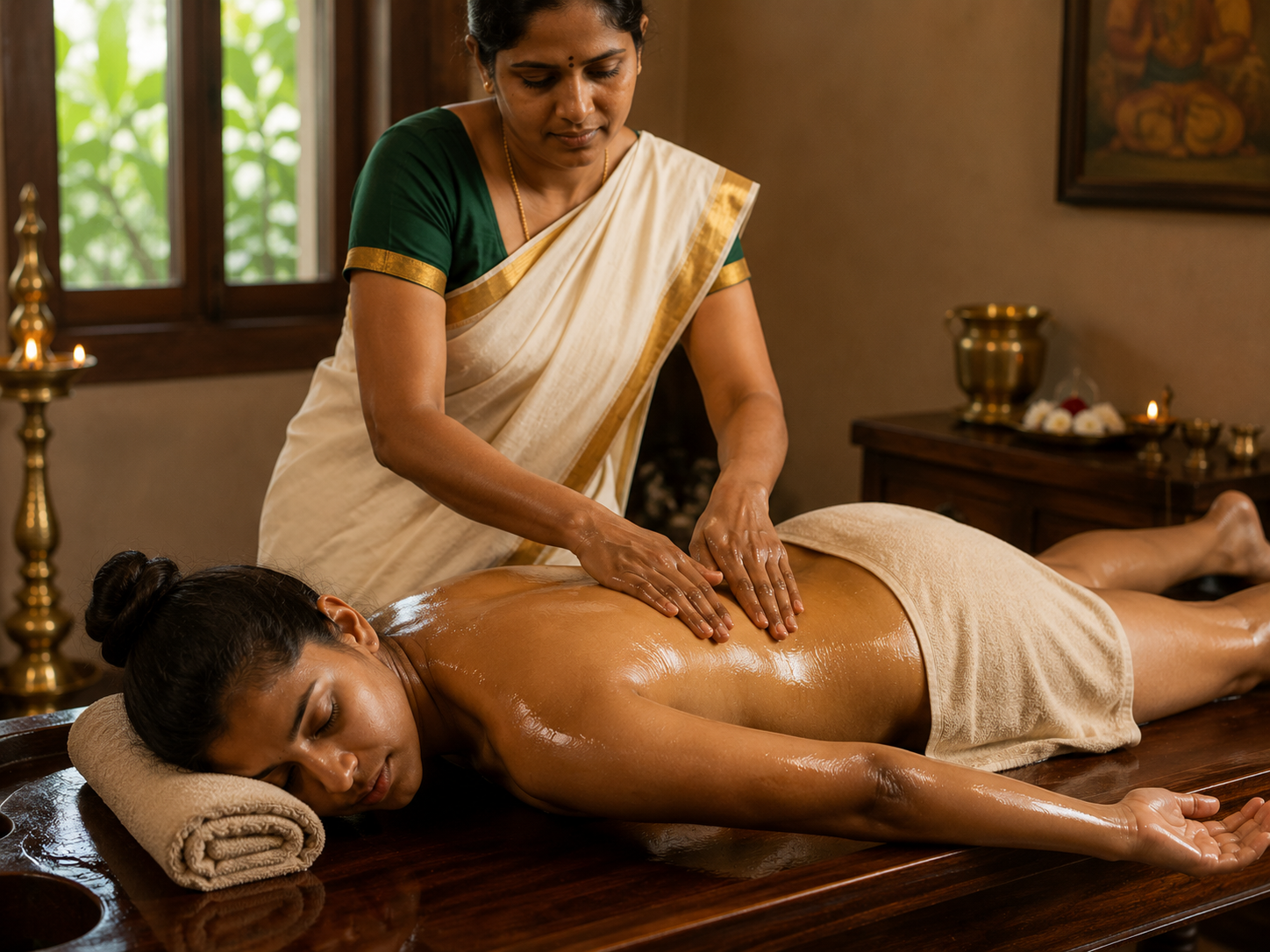
Abhyanga is one of the fundamental Ayurvedic therapies. Warm herbal oil is applied to the entire body using rhythmic massage techniques. The type of oil is selected according to the individual constitution and therapeutic purpose.
Traditionally, Abhyanga is used to relax the body, nourish the skin and tissues, support circulation and mobility, reduce muscular tension and calm the nervous system. It is particularly associated with balancing Vata dosha and is frequently included in preparatory treatments before Panchakarma cleansing procedures.
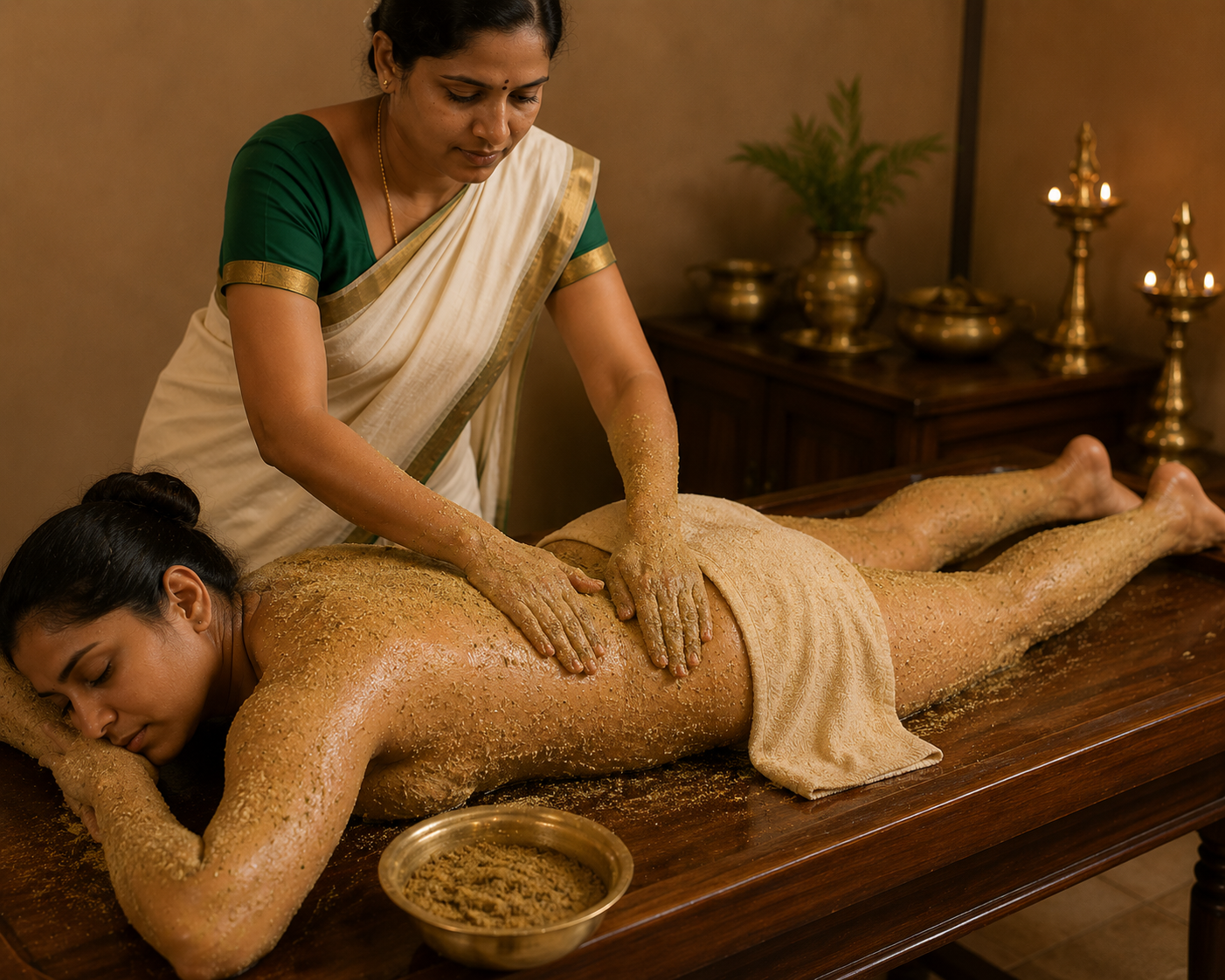
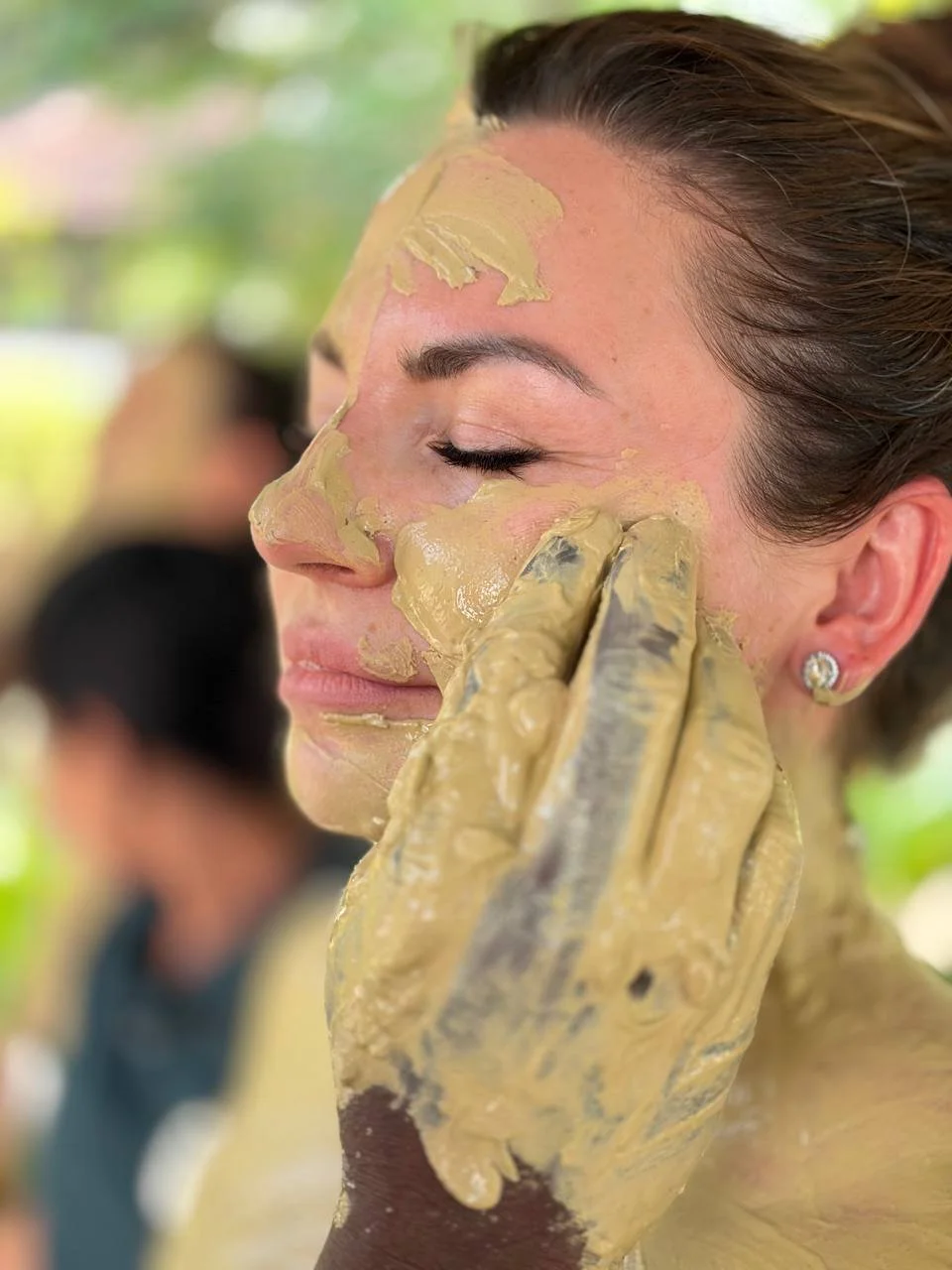
Udvartana is an invigorating massage performed with finely ground herbal powders or herbal pastes. Unlike the smooth movements of an oil massage, the treatment uses more stimulating friction and traditionally includes upward massage strokes.
It is particularly associated with stimulating circulation and metabolism, exfoliating and cleansing the skin and reducing sensations of heaviness and sluggishness. In Ayurvedic practice it is often selected for Kapha-dominant conditions and may form part of programmes focused on body composition and metabolic balance.
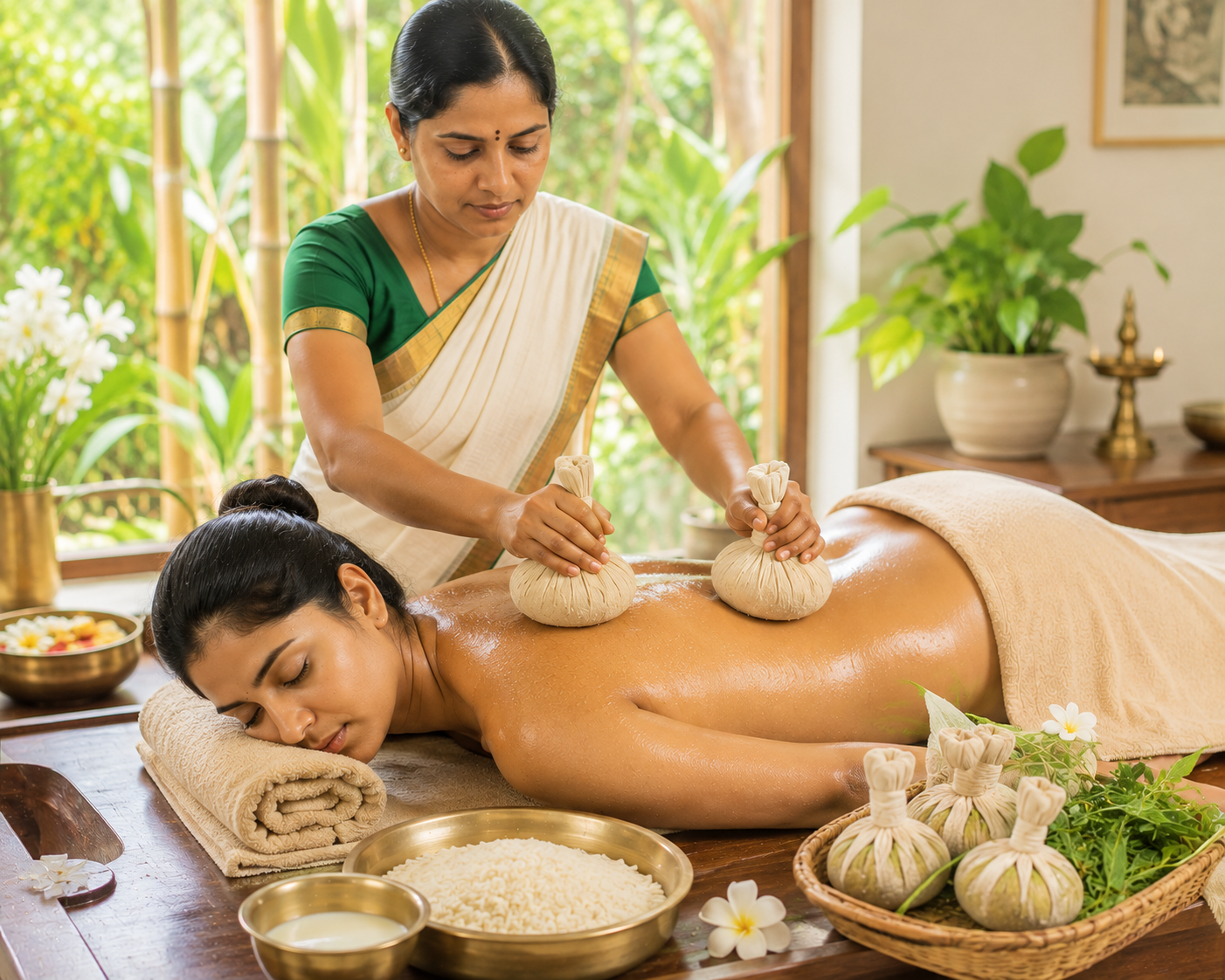
Navarakizhi and Elakizhi are traditional warming Ayurvedic therapies in which heated cloth boluses are rhythmically applied to the body. Navarakizhi uses specially prepared medicinal rice, traditionally cooked with milk and herbal decoctions, while Elakizhi uses boluses filled with medicinal leaves and other herbal ingredients.
Combining warmth, herbs and rhythmic massage, these therapies are traditionally used to nourish and strengthen the tissues, relax muscles, reduce joint stiffness and support mobility and recovery. Depending on the preparation used, they may form part of rejuvenation programmes as well as Ayurvedic care focused on muscular and musculoskeletal conditions.
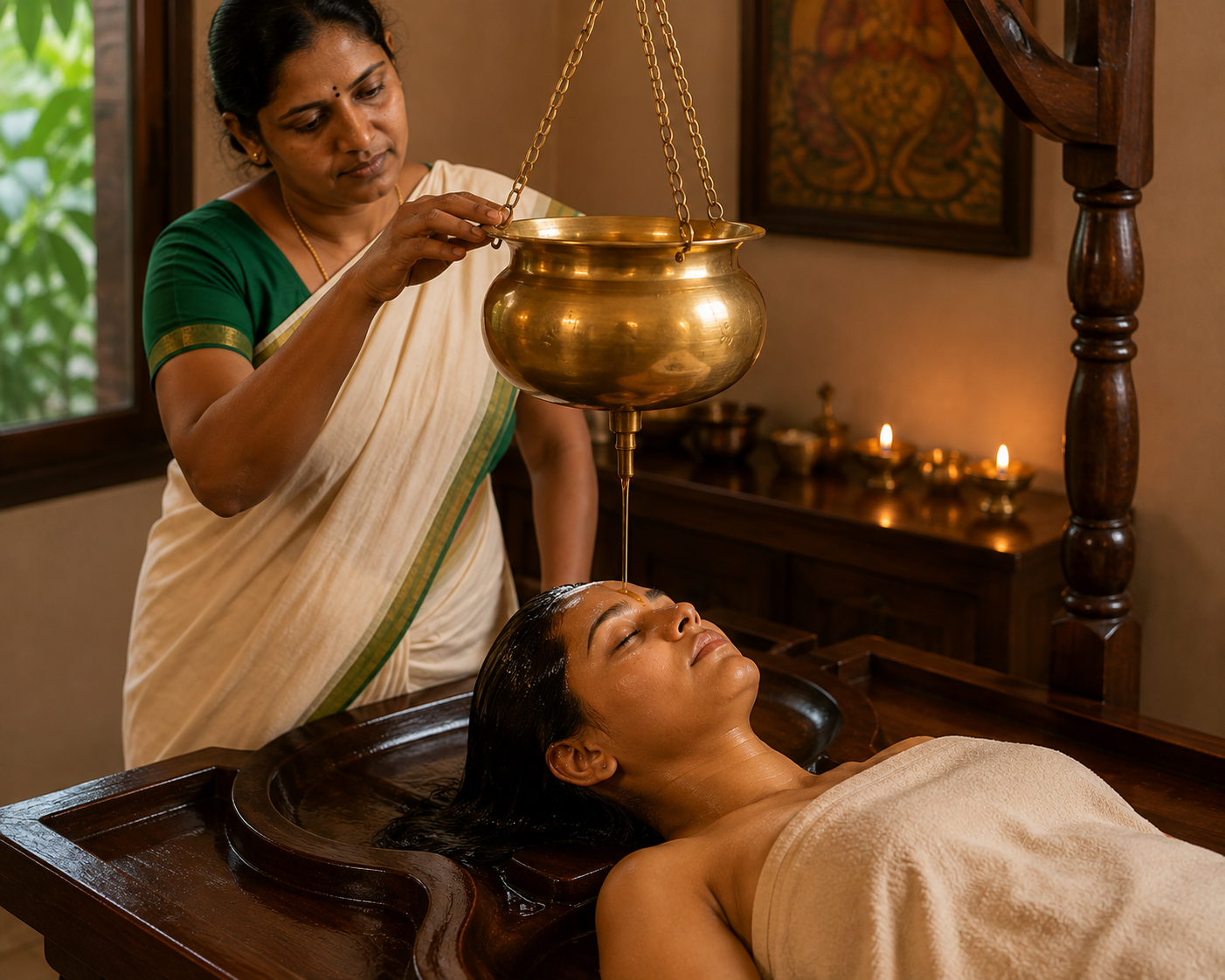
During Shirodhara, a gentle and continuous stream of warm herbal oil or another prescribed liquid is poured over the forehead, traditionally around the area between the eyebrows.
The therapy is deeply relaxing and is traditionally used to calm mental activity and the nervous system. It may be recommended in Ayurvedic programmes addressing stress, mental exhaustion, disturbed sleep and excessive nervous tension. Different liquids may be selected according to the therapeutic indication.
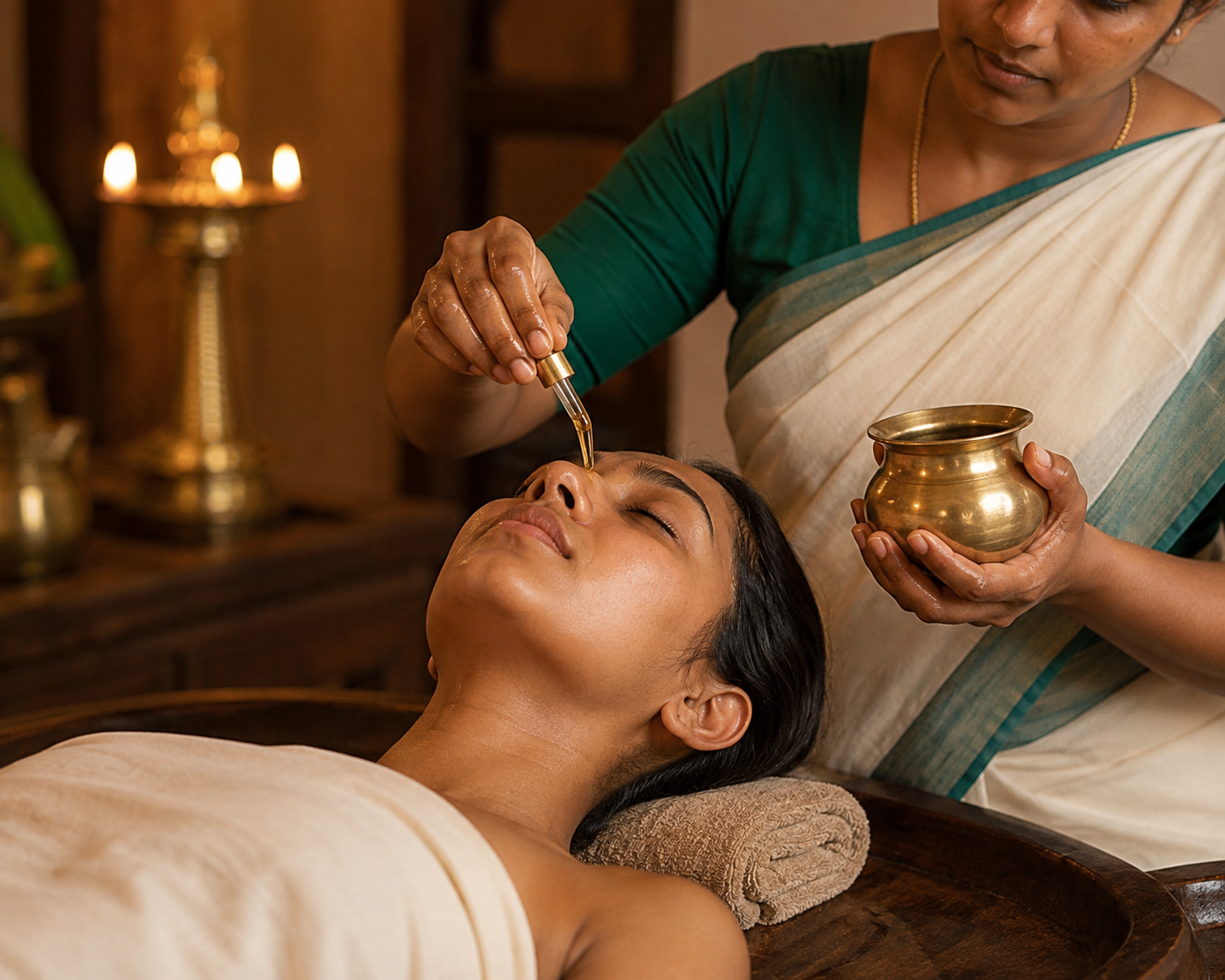
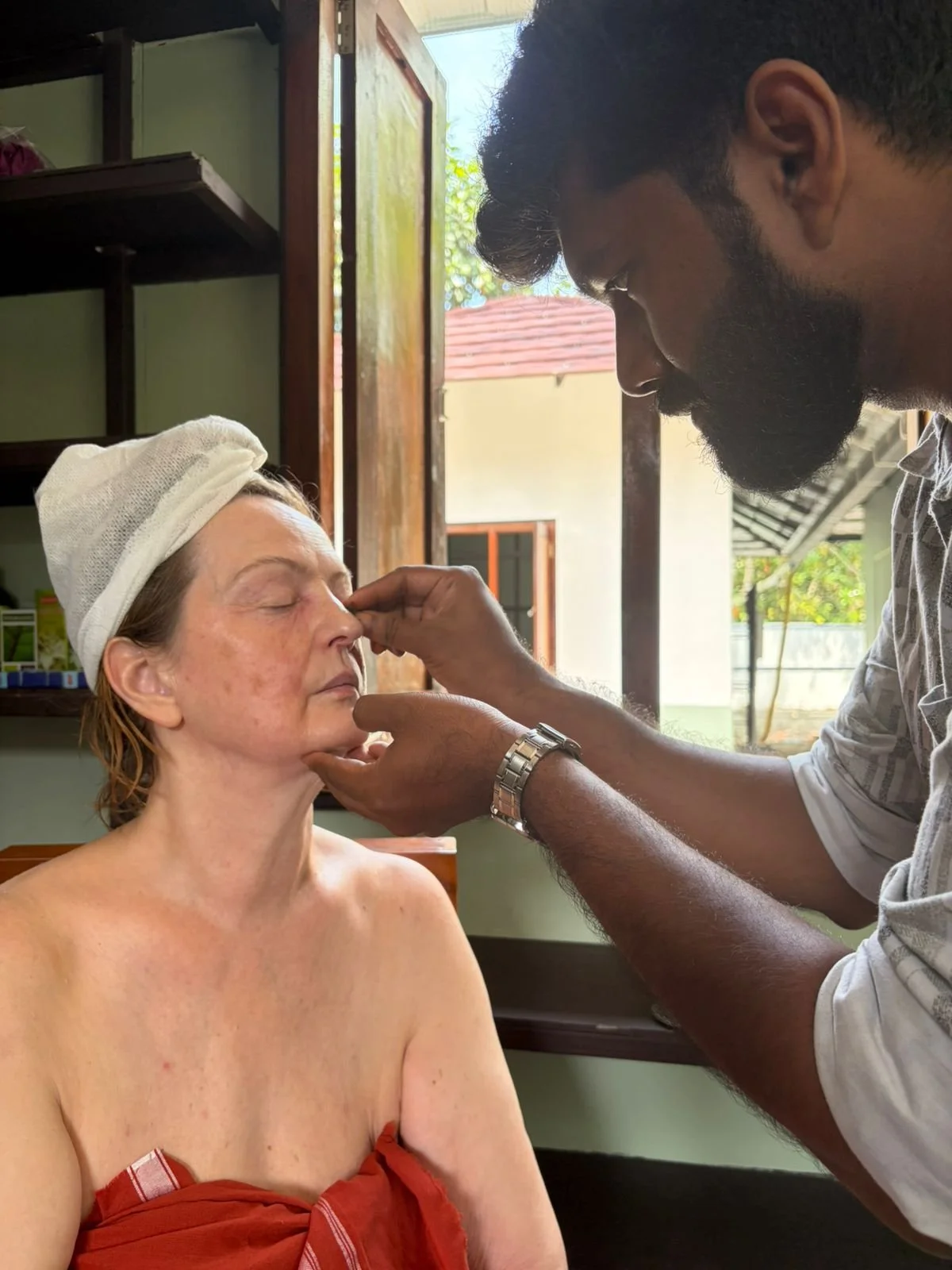
Nasya involves administering a small quantity of specially prepared herbal oil, ghee, juice or other Ayurvedic preparation through the nostrils. Depending on the type of Nasya, preparatory massage and gentle steaming of the face and neck may be performed beforehand.
In classical Ayurveda, the nose is regarded as an important therapeutic route for conditions affecting the head and neck. Nasya is traditionally used as part of programmes addressing the sinuses and upper respiratory passages and may also be selected for certain types of headache, stiffness of the neck and shoulders and other conditions of the head region.
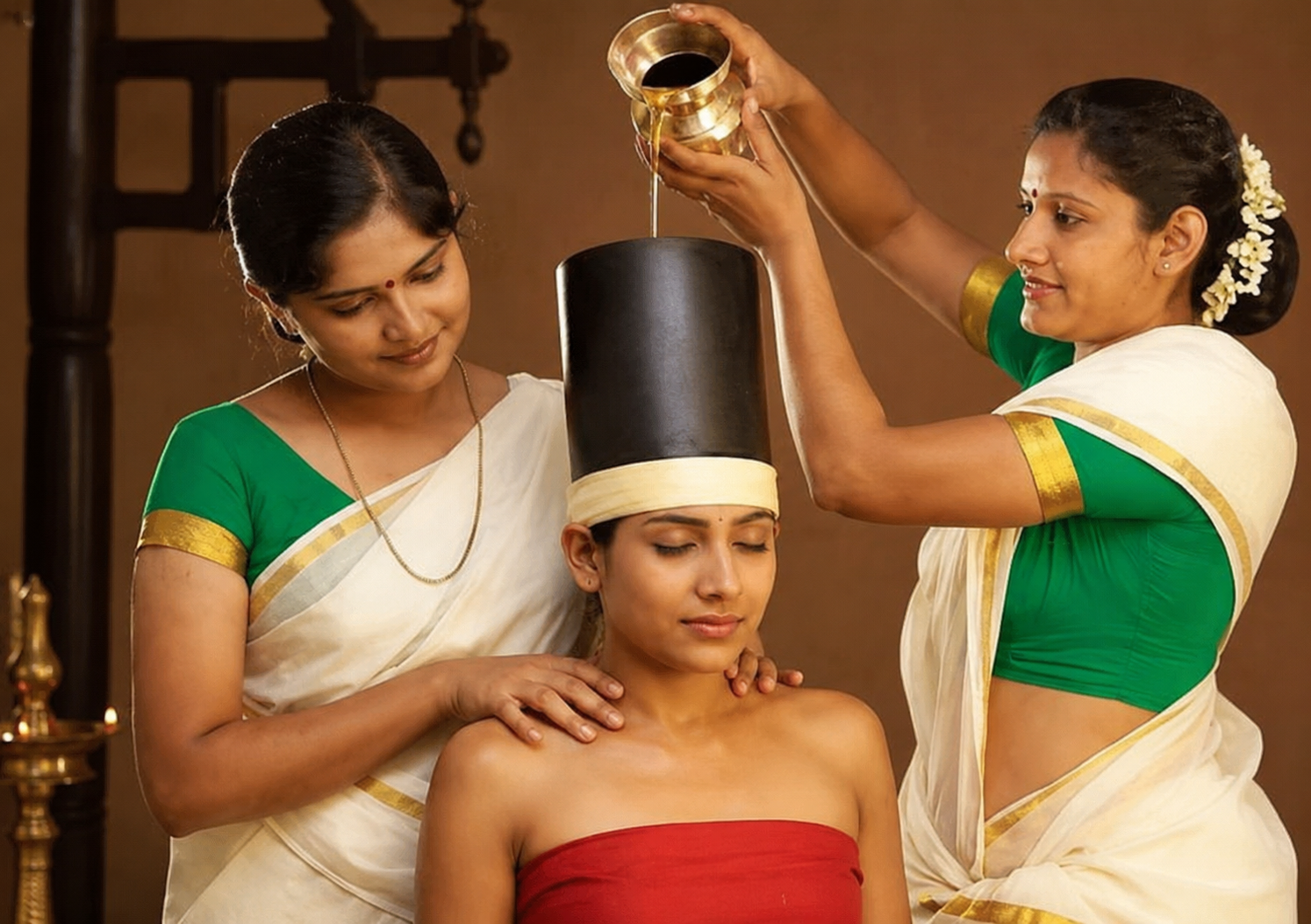
During Shirobasti, a special cylindrical cap is fitted securely around the head and filled with warm medicated oil. The oil remains in contact with the scalp for a period determined by the Ayurvedic physician.
It is one of the more intensive traditional treatments for the head region and is associated with calming Vata and nourishing the scalp and head. In traditional practice it may be recommended in programmes addressing excessive mental strain, sleep disturbances and selected neurological or head-related conditions.
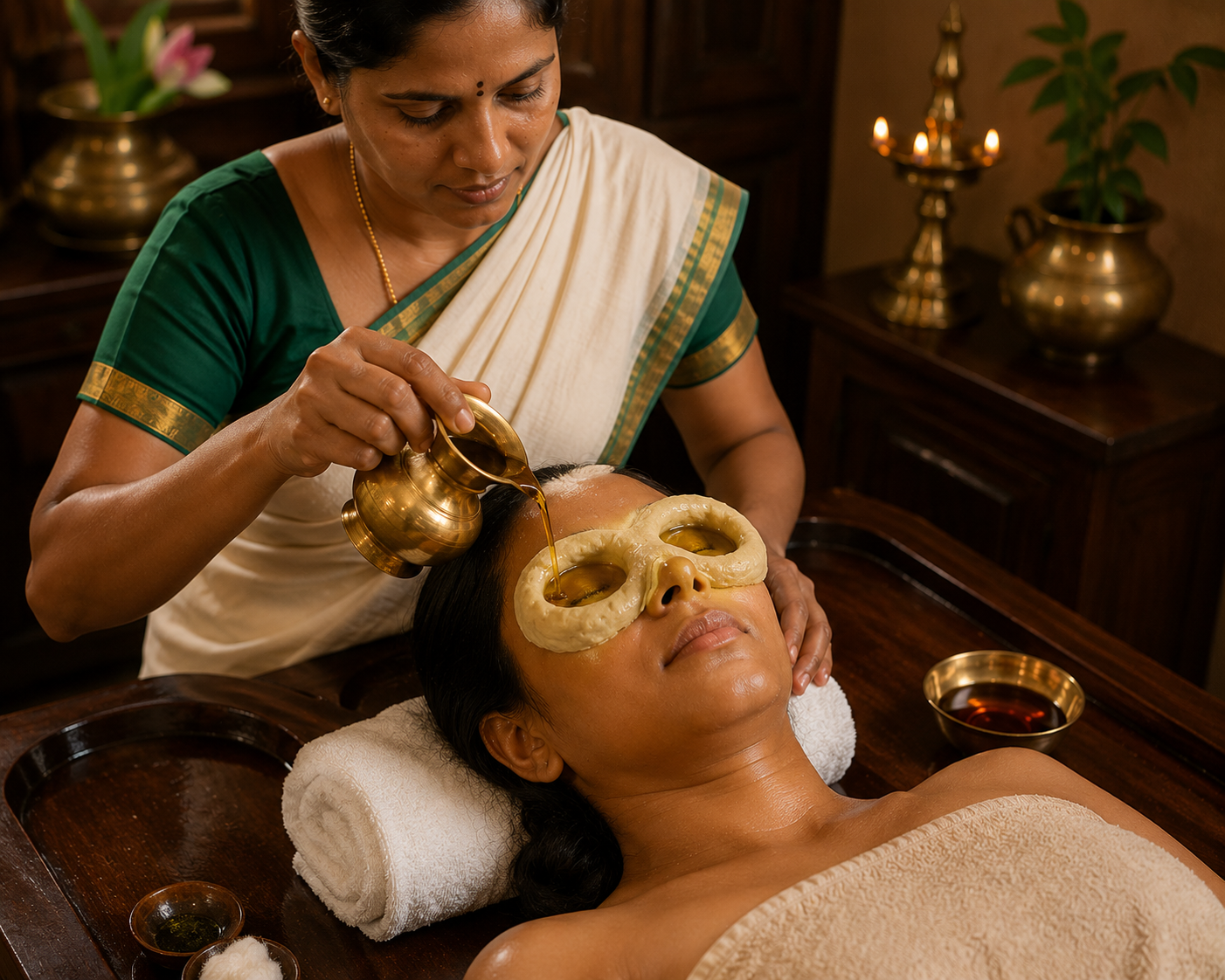
Netra Tarpana is a specialised therapy in which soft dough rings are carefully formed around the eyes and filled with lukewarm medicated ghee or another preparation prescribed for the individual.
The eyes are gently opened and closed within the liquid for short periods under supervision. In traditional Ayurveda, Netra Tarpana is used to nourish and soothe the eye area, particularly in cases of dryness, tired eyes and visual strain.
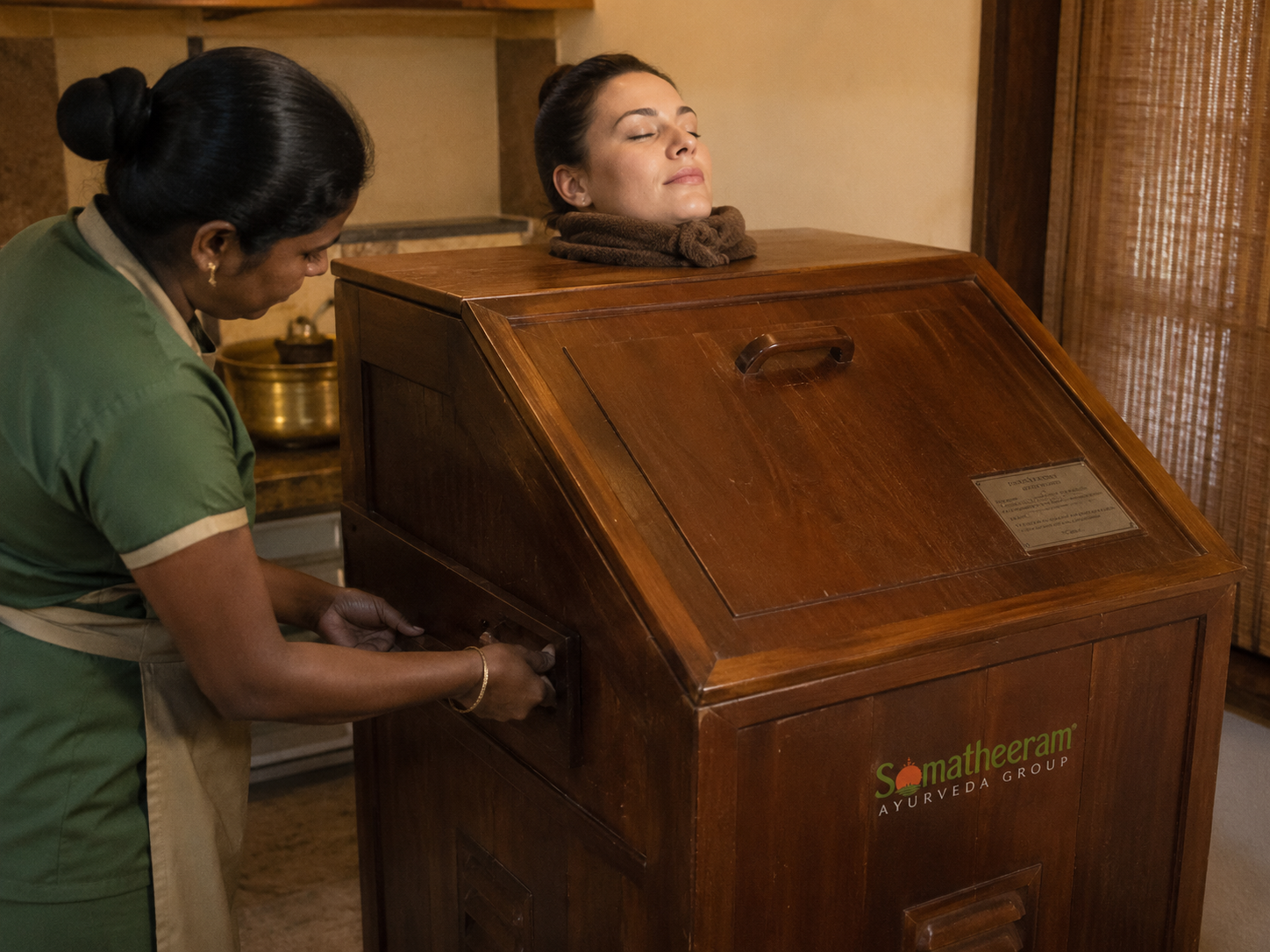
Swedana is a traditional sweating therapy in which the body is exposed to warm herbal steam while the head normally remains outside the steam chamber.
It is commonly performed after an oil massage. The warmth encourages perspiration, relaxes muscles and joints and is traditionally considered to help mobilise metabolic waste before cleansing procedures. Swedana is therefore an important preparatory therapy in many Panchakarma programmes.
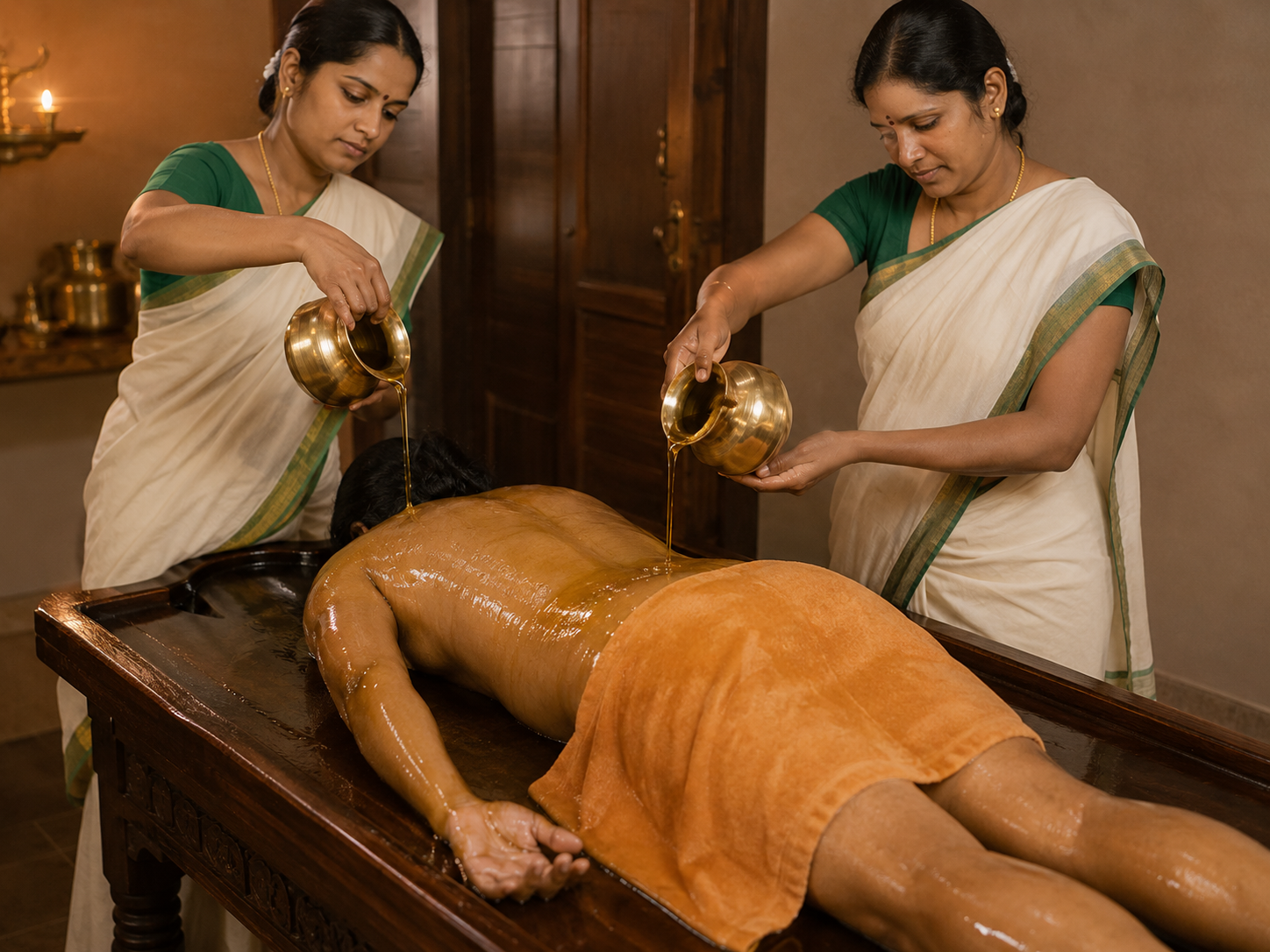
Pizhichil is a characteristic Kerala Ayurvedic treatment in which warm medicated oil is continuously poured over the body while one or more therapists simultaneously perform gentle rhythmic massage.
Combining warmth, oil and massage, the treatment is traditionally used to nourish the tissues, relax muscles and joints and support mobility and recovery. It is particularly associated with Vata-related conditions and is often included in rejuvenation programmes and programmes for musculoskeletal complaints.
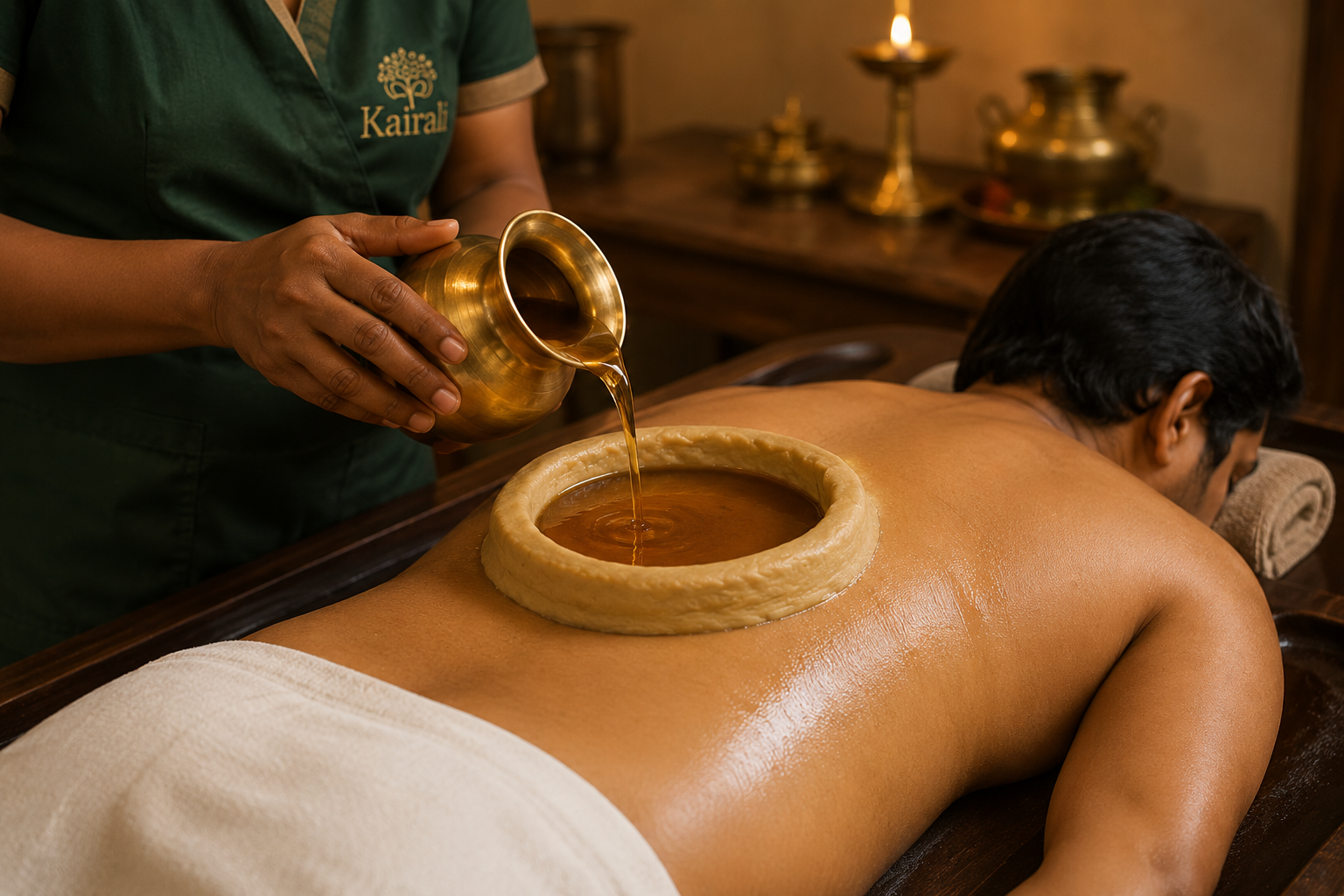
Kati Basti and Janu Basti are traditional localised treatments in which a ring made from herbal dough is placed over a specific area and filled with warm medicated oil. Kati Basti focuses on the lower back and lumbar or sacral region, while Janu Basti applies the same principle to the knee joints.
The prolonged application of warm oil helps relax the surrounding tissues, ease muscular and joint stiffness and support comfortable movement. These therapies are commonly included in Ayurvedic programmes focusing on back care, joint health and overall mobility.
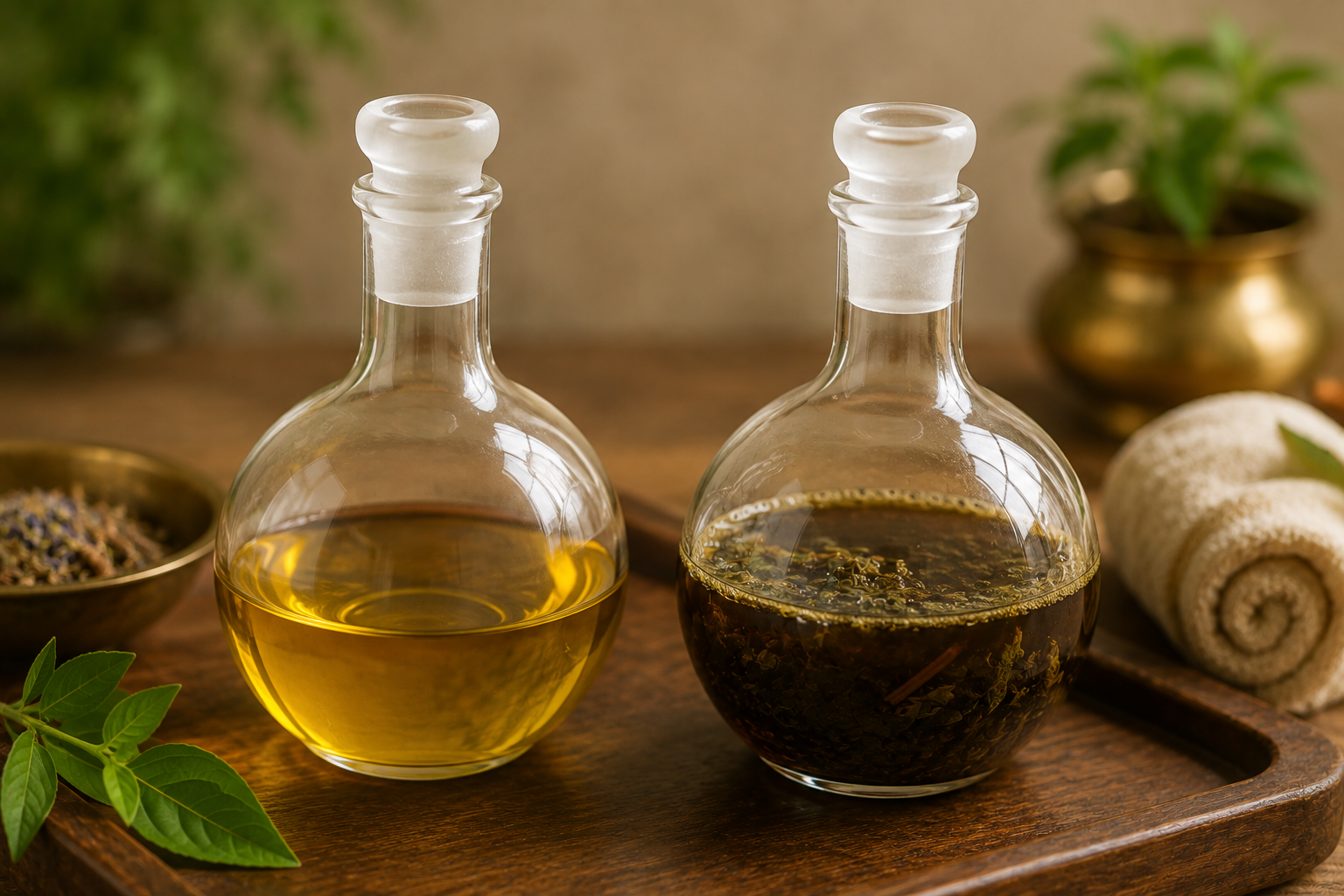
Basti is one of the principal therapies of Panchakarma and is considered particularly important in classical Ayurveda for balancing Vata dosha. The treatment involves the carefully controlled administration of medicated herbal decoctions, oils or a combination of both through the rectal route. Different types of Basti are selected according to the individual constitution and therapeutic purpose.
Traditionally, Basti is used to support the digestive and eliminatory systems, nourish the tissues and address a wide range of Vata-related imbalances, including dryness, stiffness and certain joint, muscular and neurological conditions. As an intensive Panchakarma procedure, it should always be prescribed and supervised by a qualified Ayurvedic physician.
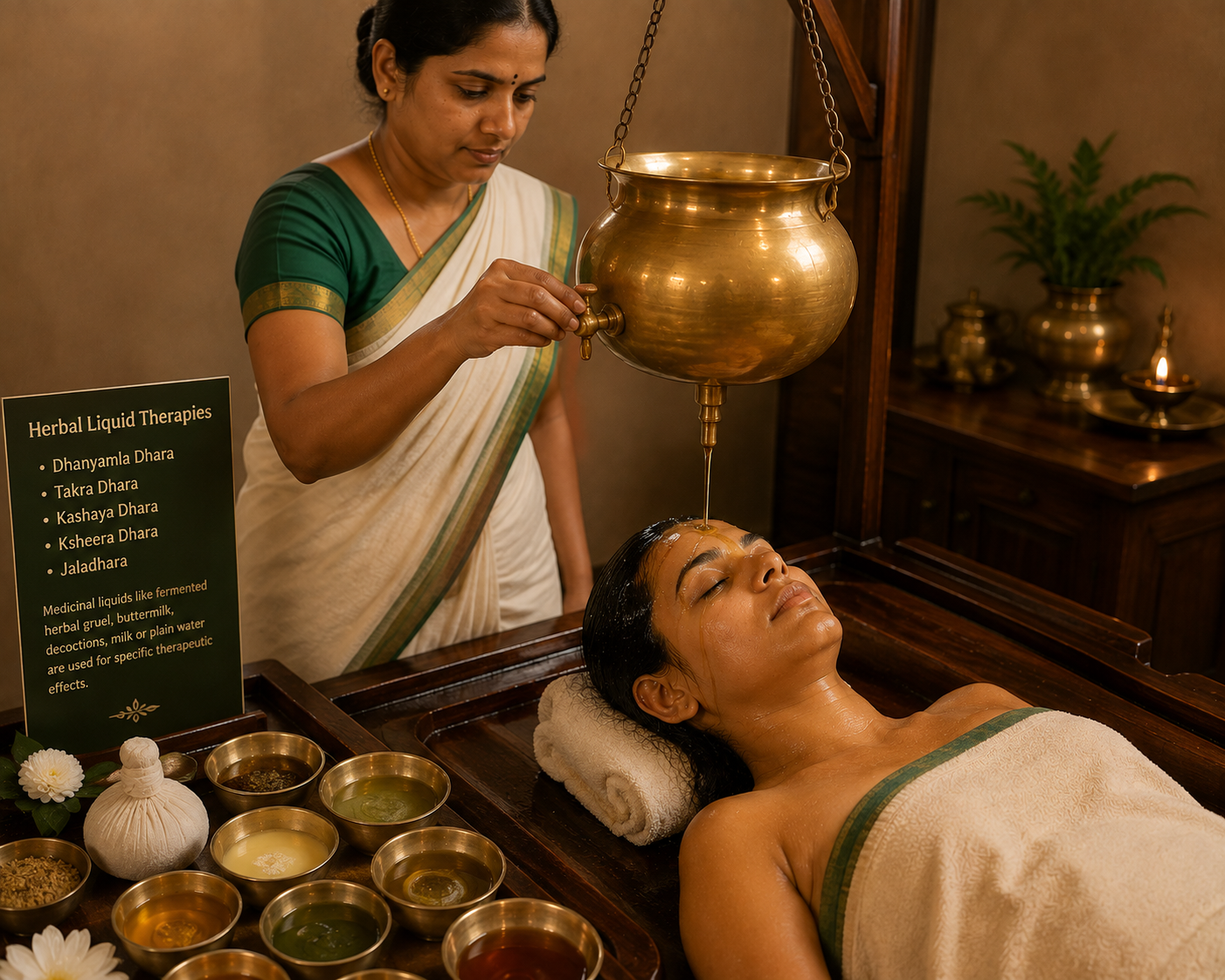
Dhanyamla Dhara involves continuously pouring warm Dhanyamla, a traditional fermented herbal liquid, over the body or selected areas. The liquid is prepared from grains and medicinal herbs according to traditional methods.
The treatment combines warmth with the properties of the herbal preparation and is traditionally used in programmes addressing stiffness, heaviness, swelling and certain musculoskeletal conditions. It is particularly associated with reducing Kapha and supporting comfortable movement.
Depending on the indication, Ayurveda also uses other forms of Dhara, in which herbal decoctions, medicated milk, buttermilk or other prescribed liquids are poured rhythmically over the body or a particular area.
The specific treatments are selected by the doctor according to the guest’s state of health and the focus of their programme.
Panchakarma – Classical Ayurvedic Cleansing Therapies
The therapies above are often used as part of broader Ayurvedic treatment programmes. Panchakarma, however, refers more specifically to a classical system of intensive cleansing and purification procedures. These should only be undertaken after consultation with and under the supervision of a qualified Ayurvedic physician.
The classical procedures include:
Vamana – medically supervised therapeutic emesis, traditionally used primarily for selected Kapha-related conditions.
Virechana – therapeutic purgation, traditionally associated particularly with eliminating aggravated Pitta through the gastrointestinal tract.
Basti – administration of medicated herbal decoctions or oils through the rectal route. In classical Ayurveda it is considered one of the most important treatments for Vata disorders. Basti in this sense should not be confused with local oil-retention treatments such as Kati Basti or Janu Basti.
Nasya – administration of medicinal preparations through the nasal route, particularly for the head and neck region.
Raktamokshana – traditional therapeutic bloodletting, included as a purification procedure in some classical Ayurvedic traditions.
These main procedures are preceded by Purvakarma – preparatory treatments that may include internal or external oleation (Snehana) and therapeutic sweating (Swedana). They are followed by a carefully managed recovery phase, including a gradual dietary regimen known as Samsarjana Krama.
The precise combination of therapies is not fixed. In authentic Ayurvedic treatment, procedures are selected by the physician according to Prakriti (individual constitution), Vikriti (current imbalance), digestive capacity, age, strength, season and the therapeutic objectives of the programme.